21 April 2021

On Wednesdays on social media, people use the hashtag #WriterWednesday to chat about all things author, book and writing, including authors promoting their own work. As I love to support self-published writers, I thought I’d join in and will be featuring a UK self-published writer every Wednesday on the website.
This week, I met Staffordshire writer Dewi Hargreaves to find out more…
Please tell everyone about yourself; when did you first become interested in writing?
I’ve written for as long as I can remember, but I never consciously made it a career choice. I dabbled – writing the occasional fanfiction, starting a story that inevitably went nowhere – until I discovered short stories in the final years of high school. I took a few classes in creative writing at university and honed my short story craft there – and also learned how to share my fiction with others without crying – and shortly after I graduated, I discovered the world of self-publishing.
Do you remember the first story you ever wrote?
I remember the first couple of short stories I properly considered ‘finished,’ though neither of them really went anywhere. I was probably sixteen or seventeen? One was about a man returning to his home city after a long time away, in a world where glaciers have buried everything, and the other was about a character who dipped into an obscure shop on a high street and noticed that the mannequins wearing the clothes were actually bodies!
What genre/genres do your books fall under?
I tend to write fantasy, though anything speculative fiction is game. I dabble in post-apocalyptic and science fiction occasionally.
What is your latest book called, what is it about and what was the inspiration behind the book?
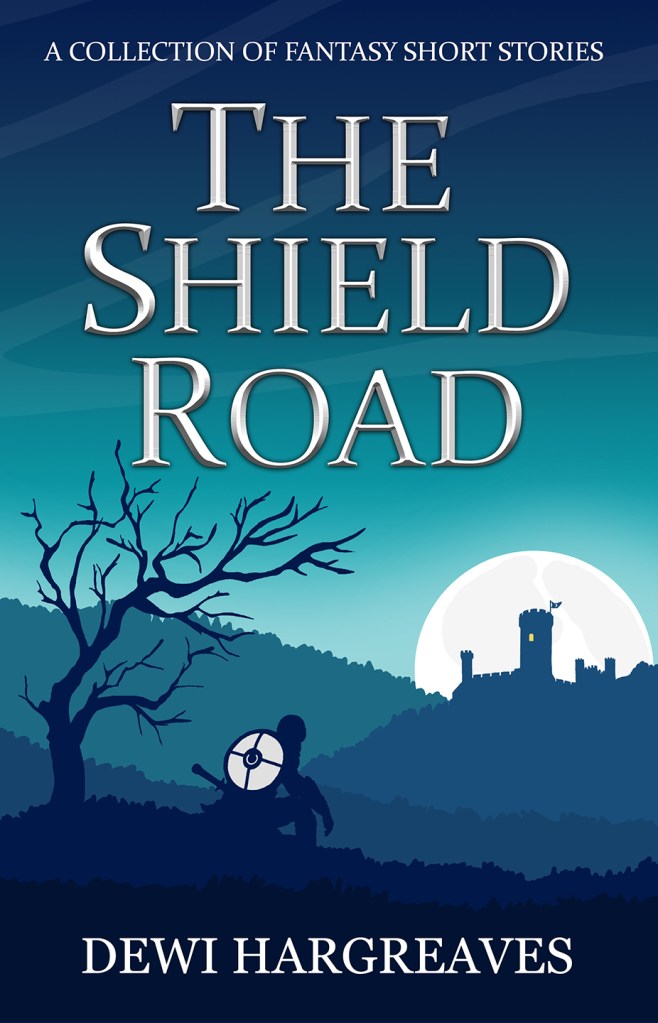
I’ve just finished up and published The Shield Road, which is a collection of 14 fantasy short stories that take place one after the other in the same world. Characters return in later stories, albeit as secondary characters, and we get to see how they’ve changed in the meantime. Each story is self-contained, but as you get towards the end, the characters come together as various clues fall into place and they realise they have to work together to prevent the return of an ancient evil.
Besides your current book, do you have any new projects coming up?
Not at the moment, though I am still writing. I’m currently putting out feelers, testing new ideas and writing up short stories, and seeing if anything has enough bite to it to carry another full-length project.
Where can people find your books?
I have a short story in Chimera, an anthology published by Lost Boys Press – which you can find on Amazon and on the Lost Boys website! The Shield Road is available in ebook and paperback from Amazon, and solely in ebook from Kobo.
What has been the greatest moment in your writing career?
Honestly, the release week for The Shield Road. I managed to triple my expected/hoped for sales count, so by all measures it was a more successful release than I expected, which had me grinning for days.
Besides writing, what hobbies or interests do you enjoy in your spare time?
I’m lucky that my hobby is also how I earn my bread and butter money. I illustrate maps for people, usually fantasy maps to go in the front matter of books, though I’ve worked on historical and contemporary maps too, and maps for art prints or to display on walls. I find great joy in helping bring other people’s worlds to life, it really is fulfilling. Other than that I like to play video games, watch YouTube and paint Warhammer miniatures – pretty standard nerdy pursuits, I think.
Which novelists do you admire?
I have a great deal of respect for everyone who pursues the indie publishing road, because it’s not an easy route at all – despite what others might think. I have a sense of fellowship with them. But overall, I’m still a huge fan of George R R Martin simply because of the sheer depth and believability of his settings in A Song of Ice and Fire. Not since Tolkien has a fantasy world felt so alive, so real, and I just gobbled it up.
What has been the best piece of writing advice you’ve received?
This is a tough one. I can’t remember who told me, but learning to separate part of the craft from each other was fundamental to me. Learning that drafting, editing, and getting feedback were entirely different things which required a different mindset really helped me to improve my writing. Don’t take feedback personally – use it as a tool to improve your art.
Do you have any tips or advice for other indie authors?
Take it one thing at a time. Draft without thinking about the next stage; just write the story how you want to tell it. Edit dispassionately, ideally a few weeks after finishing your draft. There are a lot of steps to indie publishing, but each step in itself is pretty simple. Focus on one at a time.
You can find out more about Dewi on his website or via Facebook, Instagram, TikTok or X (Twitter).
 HOME
HOME 